Flywing helicopters: affordable scale that flies itself
Flywing is the most affordable way into scale RC helicopters — ready-to-fly BO-105s, Hueys and Bell 206s with GPS stabilisation, for well under half the price of the premium brands.
Flywing is the entry point into scale RC helicopters, and the brand that proves you don't need to spend four figures to get a convincing scale machine in the air. Where a FLISHRC or a big Roban runs well over £1,500, a Flywing scale ship lands between roughly £450 and £750 — ready to fly, with GPS-assisted stabilisation built in.
What Flywing does differently
Flywing's whole proposition is affordable scale with an easy brain. The helicopters ship ready to fly with a GPS-capable flight controller and one-key stabilisation, so the machine self-levels and holds position rather than demanding constant correction. It's the same "let the electronics help you" philosophy as the pricier brands, at a fraction of the cost — the trade-off being smaller size, simpler fibreglass and a less exotic rotor head.
Most models come in more than one completion level. RTR/RTF means ready to fly with everything included; PNF/PNB means "plug and fly" — the airframe and electronics without a transmitter, for pilots who already have a radio. If those terms are new, our RTF, BNF, PNF and ARF explainer has the full breakdown.
The scale range
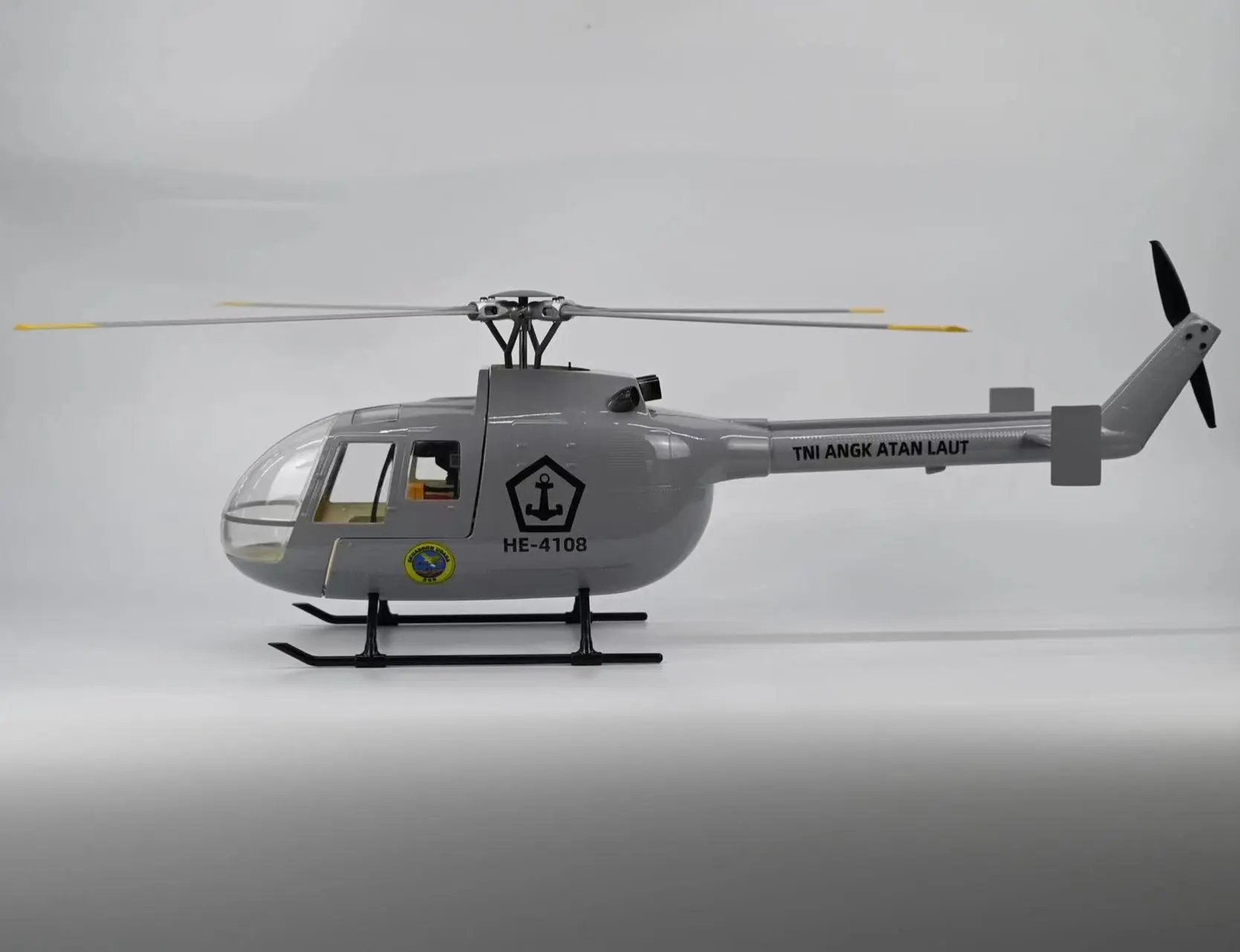
- Flywing BO-105 Universal — the flagship, a genuine scale BO-105 air-rescue ship from around £449 (grey) to £730, RTR or PNF (we reviewed it in full — see the Flywing BO-105 review)
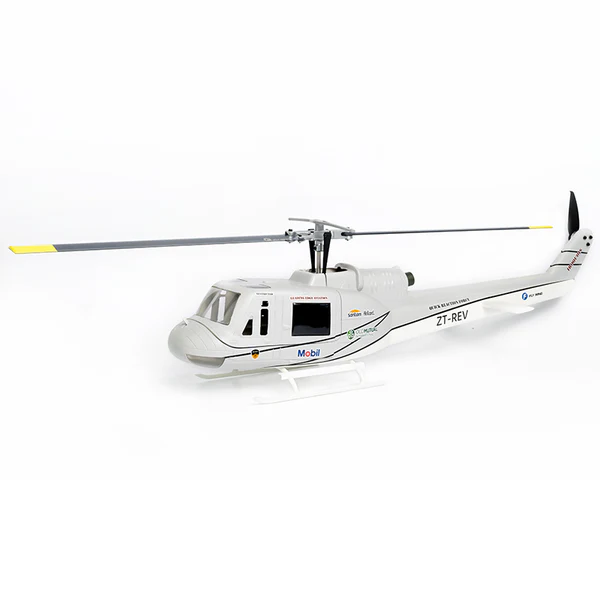
- Flywing Huey V4 — the unmistakable Vietnam-era UH-1, around £599, in olive and white
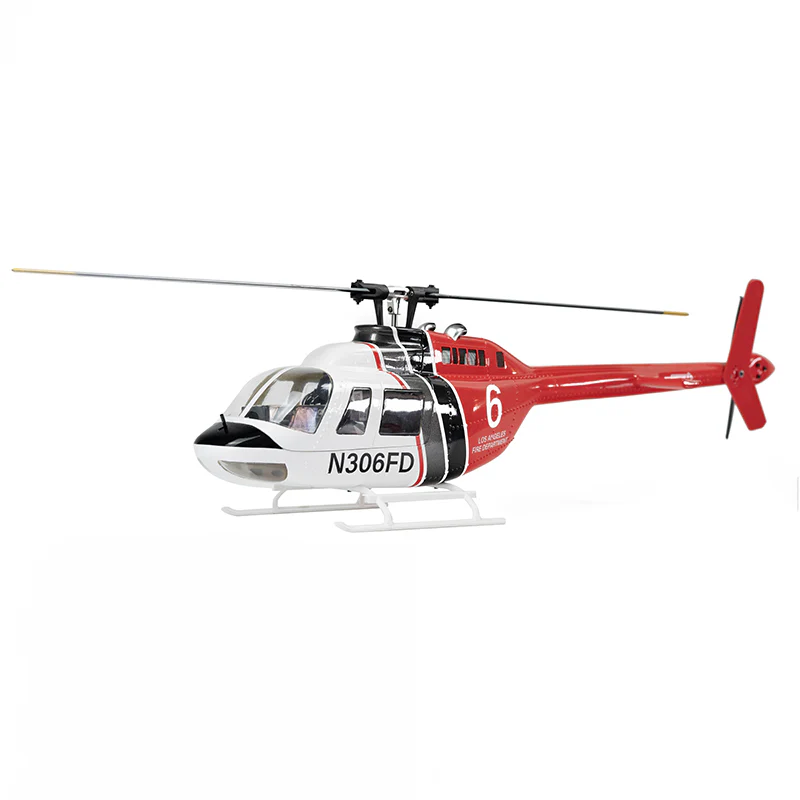
- Flywing Bell 206 — the civilian JetRanger everyone recognises, around £649
The sport option
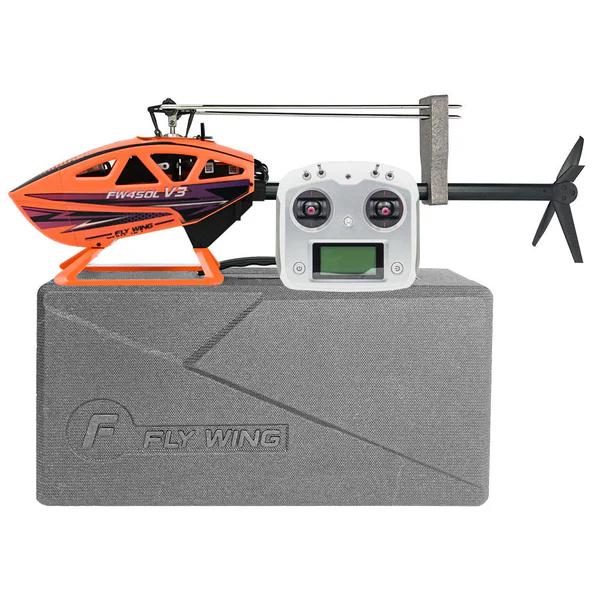
Not everything Flywing makes is scale. The Flywing FW450L-V3, around £589, is a 450-size sport machine in orange or green — a more conventional flybar-less helicopter for pilots who want to fly faster, more aerobatic circuits rather than slow scale profiles. It's a useful stepping stone between a trainer and a full collective-pitch machine.
Who Flywing is for
Flywing is for the pilot who wants the scale look and the confidence of GPS stabilisation but can't — or would rather not — spend four figures on a first scale ship. It's the natural next step up from a small trainer, and a low-risk way to find out whether scale flying is for you before committing to a FLISHRC or a Roban.
Two honest caveats. First, these are still real helicopters, not toys — you'll want to be able to hover and land a smaller machine before you buy one; if you're brand new, start with our best under £150 shortlist and learn your first hover first. Second, when you're ready for more scale size, detail and electronics, the step up is the FLISHRC FL500 V2 range — and our Roban vs FLISHRC guide maps out where the premium brands go next.
Featured in this article
All helicopters →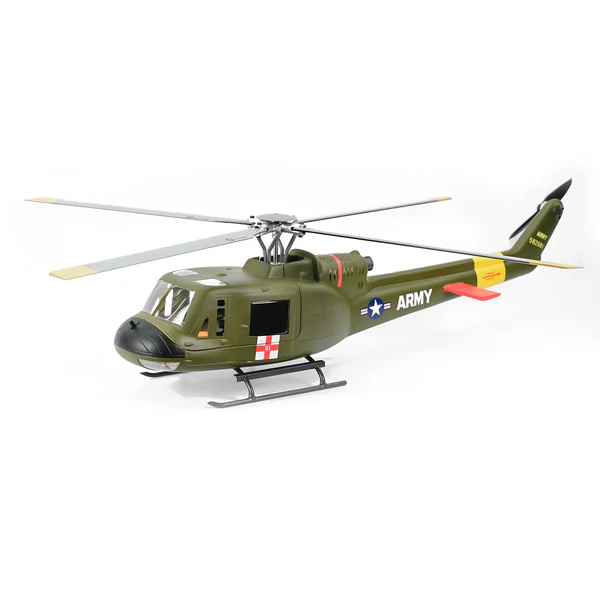 RC Helicopters
Flywing Huey V4 RC helicopter Ready-to-fly
£599.99£669.99
 RC Helicopters
Flywing BELL-206-V3 PNB RC Helicopter
£649.99
 RC Helicopters
Flywing Huey V4 White RC helicopter Ready-to-fly
£599.99£669.99
 RC Helicopters
Flywing FW450L-V3 Helicopter RTF RC Helicopter orange
£589.99
 RC Helicopters
Flywing BO-105 Universal RC Helicopter RTR- Grey
£449.99£689.99
Keep reading · Guides
RC helicopter gyros and governors explained
Two systems keep a helicopter pointing straight and spinning at a constant speed: the tail gyro and the governor. Here's what each does, and how to spot when one needs adjusting.
The RC helicopter swashplate explained: CCPM, collective and cyclic
The swashplate is how your control inputs reach the spinning blades. Understand collective, cyclic and CCPM mixing and the whole helicopter suddenly makes sense.
Flybarless (FBL) systems explained: what they do and why every modern heli has one
The spinning paddles are gone. Modern RC helicopters use an electronic flybarless unit instead — a three-axis gyro brain that makes them steadier, more precise and lower-maintenance. Here's how it works.