Indoor vs outdoor RC helicopters: which to start with
Your room or a club field, two different aircraft, two different learning curves. The right answer depends on where you actually have space to fly.
- Section
- Beginners
- Published
- 2026-05-15
- Read time
- 6 min
Most people thinking about their first RC helicopter assume they will fly it outdoors. Most people who actually learn to fly an RC helicopter started indoors. The two environments are wildly different, the right aircraft for each is wildly different, and picking the wrong starting environment is one of the most common reasons new pilots quit in the first month.
What "indoor" actually buys you
The number one obstacle for any new heli pilot is wind. A 2mph breeze that you cannot feel on your face is enough to push a 250g coaxial sideways faster than you can correct. Outdoors, wind is always there, even on what looks like a still day. Indoors, there is none.
The number two obstacle is space anxiety. Outdoors, at a club field, a beginner pilot is thinking simultaneously about the throttle, the cyclic, the tail rotor, the wind, the trees, the other pilots, the cows in the next field, and whether anyone is watching them be terrible at this. Indoors, in a quiet room, there is nothing to think about except making the helicopter hover.
Combine the two and indoor flying is, by an enormous margin, the easier learning environment. The downside is the ceiling and the walls.
What indoor flying actually needs
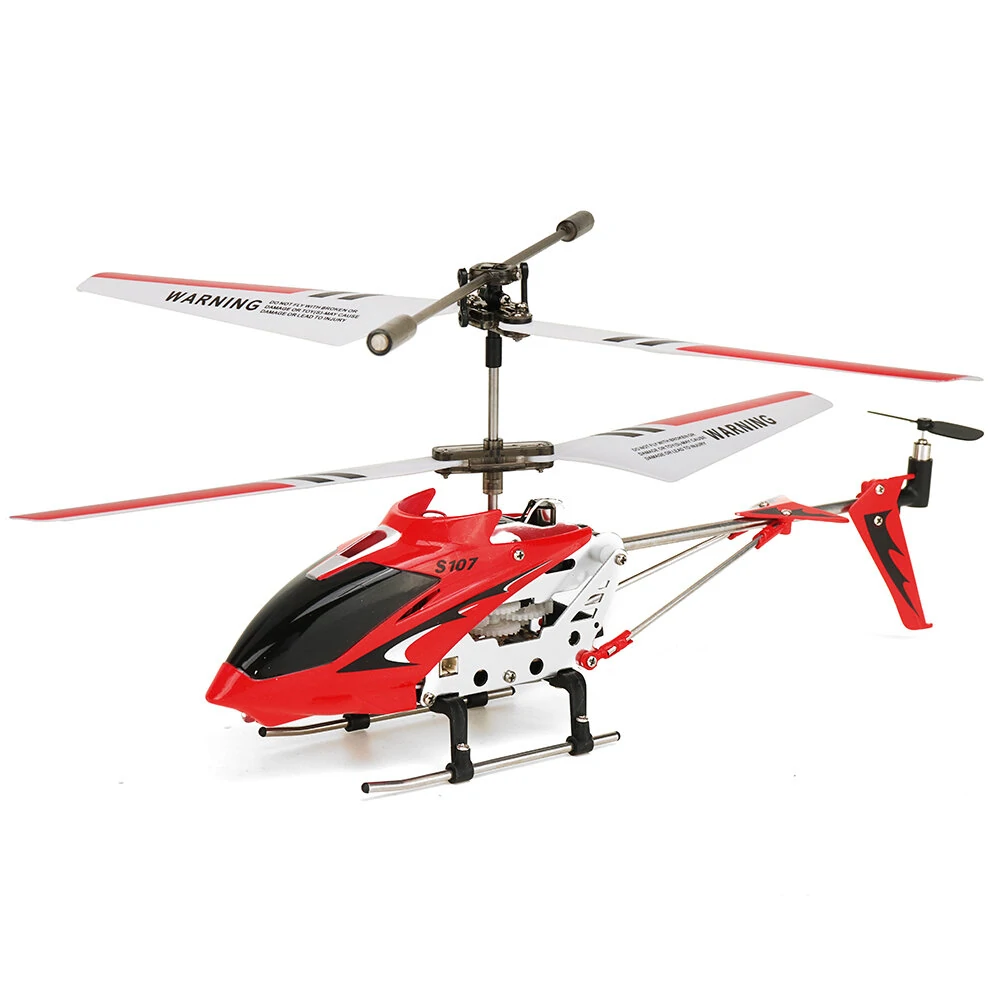
A small coaxial or fixed-pitch helicopter — typically 50g to 200g — designed for indoor stability. The Blade Nano CP S2, the E-flite Blade 70 S, the Hubsan H102 family. These are all sub-£100, all easy to source, all designed for the room you are reading this in.
Space requirements:
- Minimum 4m x 4m clear floor area for a coaxial
- 5m x 5m for a small fixed-pitch
- 3m minimum ceiling height
- No ceiling fans, low-hanging lights, or bookshelves in the flight path
The right room is usually a living room with the furniture pushed back, a garage with the car outside, or a village hall booked for an hour. Bedrooms work for the smallest coaxials but the ceilings are usually too low for confident flying.
What outdoor flying actually buys you
Two things indoor cannot give you. First, the size of aircraft most people actually want to fly — anything 450-class or larger is too big and too fast for indoor use. Second, the realism: scale orbits, sweeping flybys, the feel of a helicopter that has air under it rather than just hovering against the threat of a wall.
Outdoor flying also means a much larger investment. The aircraft itself is more expensive, but the real cost is everything around it: transmitter (£180–£400), receiver if BNF/PNF (£25–£60), spare batteries (£100+), charger (£60–£200), club membership and BMFA insurance (£70–£120/year). A realistic budget for outdoor RC helicopter flying as a new pilot is £700 to £1,200 in the first year.
What outdoor flying actually needs
Three things, in this order:
- A club field. Public parks are functionally off-limits for anything above 250g due to the 50m-from-people rule. See our guide on where to fly an RC helicopter in the UK for the full breakdown.
- BMFA membership. £40/year, covers your £25m third-party liability insurance, and is the price of entry to almost every UK club. See BMFA membership: what it is.
- A pilot who can teach you. Most clubs have at least one instructor or experienced pilot happy to spend a session getting a beginner through their first hover. This is the single most valuable resource the club provides.
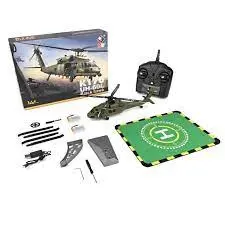
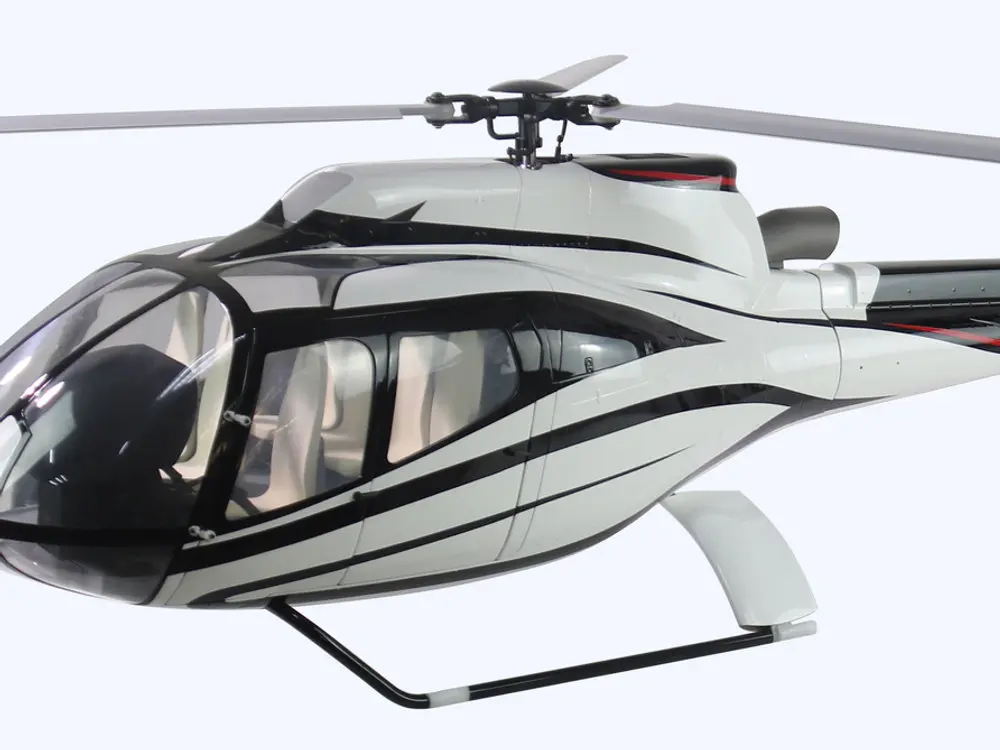
The aircraft for an outdoor first helicopter is a small collective-pitch electric — Goosky S1, OMP M1 Explorer, Blade Fusion 180 Smart — or a coaxial in the 250g–400g range if you are nervous about jumping straight to collective pitch. Avoid 450-class or larger as a first machine; the consequences of a hard landing scale with the size of the aircraft.
The honest recommendation
For almost every new pilot, the right answer is start indoors with a sub-£100 coaxial for the first month, then move outdoors with a real machine once you can hover competently in three orientations.
The coaxial teaches you the basics — stick coordination, throttle modulation, the muscle memory of correcting a drifting aircraft. None of that knowledge transfers perfectly to a collective-pitch machine, but the muscle memory of stick control transfers entirely. Two hours of indoor coaxial practice will save you two months of outdoor frustration.
The exception is if you already know you want to fly scale. Indoor coaxials teach hovering but not the more advanced cyclic control needed for a scale aircraft in wind. If your end-state is a scale machine, you can skip directly to a small collective pitch — but expect the first month to be slower and more expensive than starting indoors.
What not to do
Two specific mistakes to avoid:
- Do not buy a 450-class collective-pitch helicopter as your first aircraft. They are too fast, too unforgiving, and too expensive to crash repeatedly. The internet is full of people who tried and gave up.
- Do not buy a "drone-style" toy helicopter expecting it to behave like a real RC helicopter. The flight characteristics are completely different and the skills do not transfer.
Pick the indoor coaxial. Learn to hover. Then move to outdoor club flying with a small collective pitch. This is the path almost every successful RC heli pilot in the UK followed, and it is the path that will work for you.
Kit to build what you just read
More beginners
RC helicopter classes and sizes explained: 150 to 800
150, 450, 500, 700, 800 — RC helicopters are sized by class, and the number tells you the rotor size, the power, the skill needed and where you can fly. Here's the whole ladder.
8 min readHow to fly an RC helicopter: your first hover, step by step
Sticks, trims, throttle hold, the tail-in hover. The exact sequence that gets a total beginner off the ground safely — and the three mistakes that break blades in the first session.
9 min readRC helicopter vs drone: which should you actually buy?
One hovers itself and shoots 4K video; the other demands months of practice and rewards it forever. An honest comparison of what each is really for — and which suits you.
8 min read